


The Role of Citizen Science in Local Research Associations
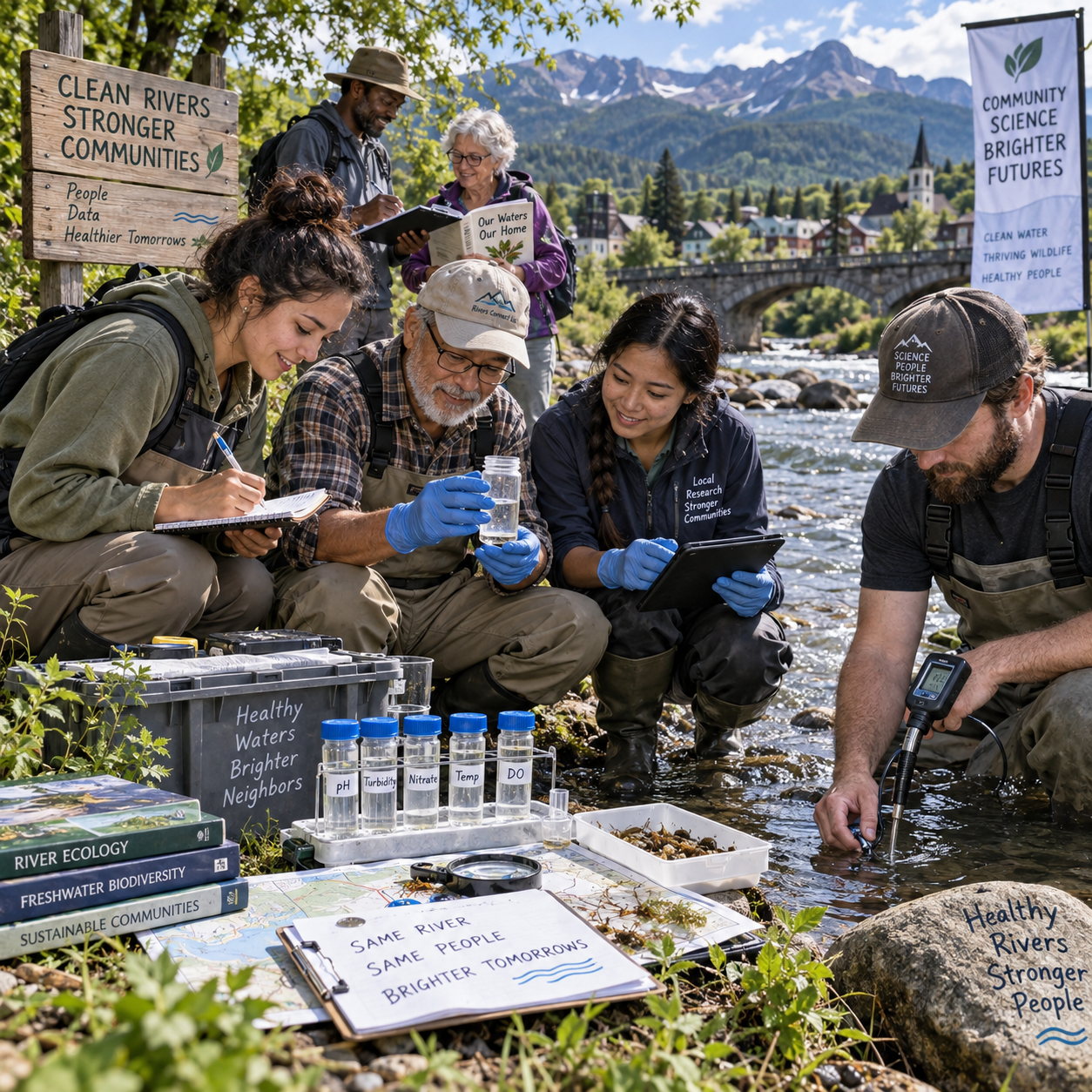
Citizen science gives local research associations a practical way to connect formal research with the knowledge, questions, and experiences of the people who live in a place. When projects are carefully designed, residents can contribute observations, collect evidence, interpret findings, and help communicate results without weakening professional research standards.
What Is Citizen Science?
Citizen science is research conducted with meaningful contributions from members of the public, including observation, data collection, analysis, interpretation, and communication. In a local research context, it allows non-professional participants to work alongside researchers on questions that affect their communities.
The term covers a wide range of activities. Residents might record plant species in a local park, measure stream conditions, document changes to historic buildings, map accessibility barriers, or interview neighbors about changes in community life. Their role can extend beyond following instructions. In well-designed projects, participants help identify research priorities and discuss what the evidence means.
Citizen science therefore overlaps with community-based research and public participation in research, although the approaches are not identical. Some projects mainly involve public data collection, while others share decisions about research methodology, interpretation, and dissemination. The appropriate model depends on the association’s goals, the subject being studied, and the time and skills available to participants.
A local research association can act as a coordinator, method adviser, trainer, or partner. Its responsibility is to make the research question understandable, provide a consistent process, and treat contributors as partners whose time and local knowledge deserve respect.
Why Citizen Science Matters to Local Research Associations
Citizen science matters to local research associations because it expands local reach, brings place-specific knowledge into research, and strengthens relationships between researchers and residents. Participation can help an association investigate issues that professional staff could not observe alone across every street, habitat, or neighborhood.
Local associations often work with limited funding and small teams. A network of trained participants can extend the geographic and temporal coverage of a project. For example, residents may record flooding after heavy rain, monitor seasonal wildlife activity, or document the condition of public spaces over several months. The resulting dataset may reveal patterns that occasional visits would miss.
Participation also improves the relevance of research. Residents understand local history, informal land uses, recurring problems, and changes that may not appear in official records. This local knowledge can help researchers refine questions, identify useful observation points, and interpret unusual results.
There is a relationship benefit as well. A research association that listens before it measures is more likely to earn trust. Community engagement becomes part of the research process rather than a publicity exercise conducted after the findings are complete. That distinction matters when projects concern sensitive subjects such as health, housing, heritage, or environmental risk.
Citizen science does involve trade-offs. Coordinating participants requires planning, training, communication, and data management. The association may collect more information, but it also assumes greater responsibility for explaining methods and responding to community expectations.
How Local Associations Can Use Citizen Science
To use citizen science effectively, a local research association should begin with a focused question, define participant roles, provide training, and create a simple system for recording and reviewing data. The project should serve a clear research purpose rather than use participation as an end in itself.
Choose a suitable project model
Good starting points usually involve observable events, repeatable measurements, or documented local experiences. Adaptable project models include:
- Environmental monitoring: recording water clarity, invasive species, pollinators, air conditions, or seasonal changes.
- Place-based mapping: documenting historic features, walking conditions, public amenities, or areas affected by flooding.
- Community history: collecting photographs, oral histories, and personal accounts with appropriate consent and preservation procedures.
- Social research: gathering structured observations or survey responses about local services, transport, safety, or community needs.
The association should explain what participants will do, how long the project will run, what information will be collected, and how results may be used. A one-page project brief can prevent confusion later.
Design roles, training, and tools
Participant roles may include observer, recorder, interviewer, mapper, reviewer, adviser, or public presenter. Clear role descriptions make involvement more accessible and avoid treating every contributor as if they have the same skills or availability.
Training should cover the research question, sampling rules, safety, use of equipment, recording conventions, and procedures for uncertain observations. A short demonstration followed by a practice exercise is often more useful than a long lecture. Digital tools can help, but a paper form or phone-based alternative may be necessary for accessibility and inclusion.
Before launch, test the method with a small group. Ask whether participants can complete the task in the available time, whether instructions are understandable, and whether the data produced can answer the research question. This pilot stage is a practical part of research methodology, not an administrative extra.
Benefits for Researchers and Communities
The benefits of citizen science are mutual: researchers gain additional observations and contextual knowledge, while communities gain research literacy, opportunities to influence local questions, and a clearer connection between evidence and everyday concerns.
For researchers, public participation can broaden sampling coverage and reveal questions that may otherwise remain invisible. Participants may notice a recurring odor, a historic name for a location, or a seasonal change that helps explain a numerical pattern. Their observations do not replace expert analysis, but they can improve the questions experts ask.
Communities benefit when research is understandable and usable. Participants learn how evidence is gathered, why comparison matters, and how uncertainty affects conclusions. That experience can make public discussions about planning, conservation, heritage, and local services more informed.
Participation can also create community ownership. Ownership does not mean that every participant controls the final interpretation. It means people can see how their contribution fits the project, receive the findings, and have a meaningful opportunity to comment on implications.
For example, an association studying urban tree health might ask residents to photograph street trees, record visible symptoms, and identify locations with limited shade. Researchers could validate a sample of reports, combine the observations with maintenance records, and present a local map at a community meeting. Residents contribute evidence and priorities; the association contributes sampling guidance, analysis, and transparent reporting.
Ensuring Reliable and Ethical Research
Reliable and ethical citizen science depends on clear protocols, participant training, data validation, informed consent, privacy protection, and honest reporting of limitations. Public involvement strengthens research only when the association manages these responsibilities deliberately.
Data quality begins with a protocol that specifies who records what, where, when, and in which format. Associations should define required fields, acceptable measurement ranges, and procedures for unusual findings. Duplicate observations, calibration checks, reference photographs, and expert review can support data quality and validation.
Validation should be proportionate to the project. A biodiversity survey may require expert confirmation of difficult species, while a local history project may need source comparison and contributor review. Researchers should preserve original records and document any corrections so that later users can understand how the dataset was produced.
Research ethics requires more than a consent form. Participants should know the project’s purpose, potential risks, expected time commitment, data uses, retention period, and withdrawal options. Sensitive interviews and photographs may require special safeguards. Personal names, exact home locations, health information, and identifiable stories should not be published casually.
Associations should also agree on data ownership, licensing, attribution, and recognition before collection begins. Some contributors may prefer anonymity; others may want public acknowledgment. Transparent reporting should describe participation levels, missing data, method changes, and uncertainty instead of presenting community-generated evidence as flawless.
Guidance from established research bodies, such as the National Academies’ work on reproducibility and replicability, can help associations think carefully about documentation and repeatability. Local projects still need context-specific ethical decisions, particularly where vulnerable people or private information are involved.
Common Challenges and Practical Solutions
The main citizen science challenges are recruitment, sustained participation, uneven data quality, limited resources, and communication gaps. Associations can reduce these risks by narrowing the project scope, supporting participants consistently, and planning for realistic levels of involvement.
Recruitment and retention
Projects often attract initial interest but lose participants when tasks are unclear or the work feels disconnected from results. Explain the time commitment before enrollment, offer more than one participation route, and provide regular updates. A participant who can contribute one observation a month should not be excluded because they cannot attend every meeting.
Uneven data quality
Variation is common when participants have different experience levels. The correction is not to discard public involvement. Use short training, examples of acceptable records, validation checks, and a way to flag uncertainty. Analyze beginner and expert observations appropriately rather than assuming all records have identical confidence.
Limited capacity
Small associations may not have staff for constant monitoring. Start with a six- to twelve-week pilot, use a manageable number of indicators, and assign responsibility for data storage and participant communication. Choosing a smaller project for reliability is usually wiser than launching a broad project that cannot be supported.
Communication and trust
Participants may become frustrated if they never hear what happened to their contributions. Share interim findings, explain delays, and discuss results in plain language. If the findings contradict expectations, say so directly. Trust grows through accurate feedback, including disappointing or inconclusive outcomes.
Building Long-Term Citizen Science Partnerships
Long-term citizen science partnerships grow when associations evaluate projects, return useful findings, recognize contributions, and give communities a voice in future research priorities. A single successful project can become the foundation for a broader research program if the relationship is maintained after data collection ends.
Evaluation should examine more than the number of records submitted. Ask whether the project answered its research question, reached the intended participants, produced usable data, treated contributors fairly, and generated value for the community. A short participant survey, team debrief, and data audit can identify improvements for the next cycle.
Share findings in several formats: a technical report for researchers, a short summary for participants, a public presentation, and accessible visual materials where appropriate. Explain what the evidence can and cannot show. Returning results is part of ethical community engagement, not an optional communications task.
Associations can embed citizen science by maintaining a participant register, creating recurring training sessions, appointing community advisers, and reserving project funds for accessibility and feedback. They should also invite residents to help set future questions. This moves the relationship from occasional labor to continuing collaboration.
When planning a new project, use the PART framework: Purpose, Access, Reliability, and Trust. Confirm that the purpose is meaningful, access is inclusive, reliability is testable, and trust is supported by consent, transparency, and follow-through. It is a simple filter, but it prevents many avoidable problems.
Frequently Asked Questions
What is citizen science in a local research context?
It is research carried out with local residents who contribute to activities such as observation, data collection, analysis, interpretation, or communication. The project remains methodologically structured while drawing on public participation and local knowledge.
How can a research association start a citizen science project?
Choose a focused local question, identify the evidence needed, recruit appropriate partners, test the method, train participants, and establish procedures for consent, data storage, validation, and feedback before full launch.
How can citizen-collected data be made reliable?
Use clear instructions, standardized recording forms, practical training, pilot testing, duplicate checks, expert review where needed, and transparent documentation of uncertainty and missing information.
What ethical issues should citizen science projects address?
Projects should address informed consent, privacy, safety, accessibility, data ownership, attribution, withdrawal rights, potential harm, and the responsible publication of sensitive information.
What are the benefits for community participants?
Participants can develop research skills, contribute to decisions about local issues, strengthen connections with neighbors, preserve local knowledge, and see how their observations inform credible community research.
Citizen science is most effective when local research associations treat participation as a shared research relationship. With a focused question, sound methodology, ethical safeguards, useful feedback, and respect for community expertise, residents can help produce research that is more locally relevant and more connected to the people it is meant to serve.