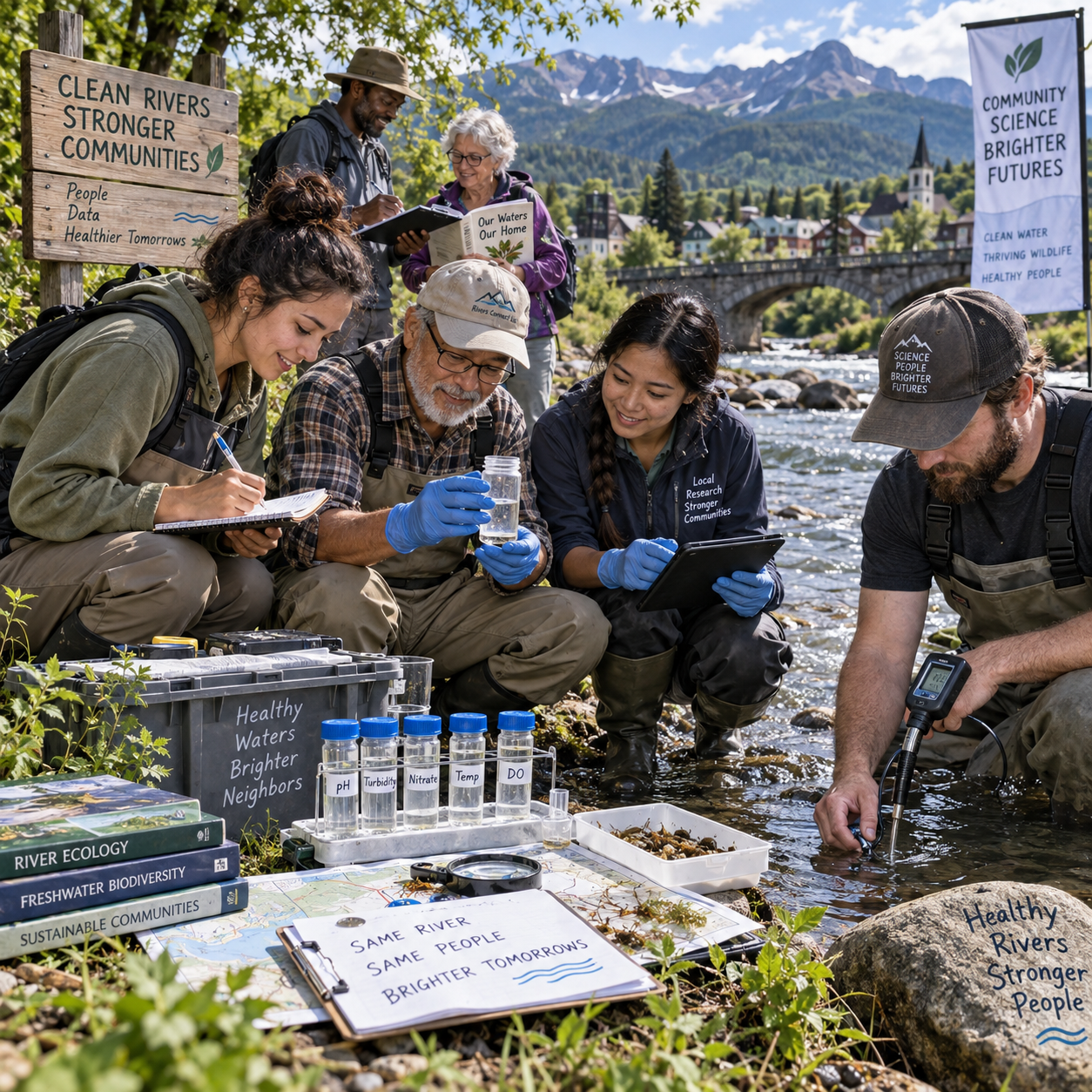


Funding Strategies for Community-Based Scientific Initiatives: A Practical Guide for Local Researchers

Why Funding Is the Biggest Barrier for Community Science Groups
Funding is the single most common reason promising community-based research projects stall before they start. Unlike university labs or government agencies, local scientific research associations rarely have institutional backing, dedicated development staff, or existing funder relationships to draw on.
The gap is structural. Most grant programs were designed with established institutions in mind — requiring 501(c)(3) status, audited financials, or a track record of prior awards that newer groups simply haven't had time to build. Citizen science initiatives and grassroots researcher networks often do rigorous, meaningful work, but they're competing on a playing field that wasn't designed for them.
That doesn't mean funding is out of reach. It means the approach has to be deliberate. Community groups that succeed at securing resources tend to share one trait: they treat fundraising as a core organizational function, not an afterthought. The strategies in this guide are built around that mindset — practical, realistic, and grounded in how community-level science actually operates.
Mapping Your Funding Landscape: Types of Sources Available
The funding landscape for community-based research includes five main categories, each with different requirements, timelines, and trade-offs.
Government Funding Bodies
Federal, state, and municipal science programs represent some of the largest pools of available money, but they're also the most competitive and administratively demanding. Agencies at the national level often prioritize projects with measurable public benefit, environmental relevance, or health outcomes — areas where community science frequently excels. Municipal and regional programs tend to be more accessible for smaller groups and sometimes have explicit mandates to support local initiatives.
Private Foundations
Philanthropic organizations supporting scientific work range from large national foundations to small family foundations with hyperlocal giving priorities. Many private foundations actively seek community-rooted projects precisely because they offer something institutional research can't: direct connection to a place, population, or ecosystem. The key is matching your initiative's focus to a foundation's stated mission — not the other way around.
Crowdfunding Platforms
Science-specific crowdfunding has matured significantly over the past decade. These platforms let community groups raise money directly from the public, which works especially well for projects with a clear, relatable goal. The trade-off: campaigns require sustained communication effort and rarely replace formal grant funding for larger budgets. Think of crowdfunding as a complement, not a substitute.
Institutional Partnerships and In-Kind Contributions
In-kind contributions — donated equipment, lab access, data storage, volunteer expertise — are often overlooked but can dramatically reduce a project's cash requirements. Partnerships with universities, hospitals, or environmental agencies can provide both in-kind support and a credibility signal that strengthens future grant applications. Even a letter of collaboration from a local university department carries weight with funders evaluating your team's scientific legitimacy.
Writing Grant Proposals That Resonate with Funders
A strong grant proposal from a community research group does two things simultaneously: it demonstrates scientific rigor and makes a compelling case for local impact. Neither alone is sufficient.
Funders reviewing proposals from non-institutional applicants are often asking an implicit question: Can this group actually deliver? Your proposal needs to answer that before they finish reading the abstract. This means front-loading your team's relevant expertise, any prior project outcomes (even small ones), and the specific community need your research addresses.
Grant writing for community groups benefits from a few specific practices:
- Lead with the problem, not the methodology. Funders respond to clearly articulated need. Describe what's at stake in your community before explaining how you'll study it.
- Use plain language for impact statements, technical language for methods. Most review panels include non-specialists who evaluate community fit alongside scientists who evaluate rigor.
- Include a realistic budget with line-item justification. Vague budgets signal inexperience; precise ones signal competence.
- Name your dissemination plan. How will findings reach the community? Funders increasingly want to know that results won't disappear into a report nobody reads.
One honest caveat: grant writing is time-intensive, and the return on investment varies. First-time applicants should expect a lower success rate and treat early submissions as learning opportunities. Requesting reviewer feedback after a rejection — which many programs allow — is one of the fastest ways to improve future proposals.

Leveraging Your Researcher Network to Unlock New Opportunities
A well-connected researcher network is one of the most underused funding assets a community science group has. Relationships within your network can surface funding opportunities before they're widely advertised, enable joint applications that strengthen individual proposals, and provide access to funders who trust a known colleague's recommendation.
Joint applications deserve particular attention. When two or three community research groups collaborate on a single proposal, they can credibly claim broader geographic reach, larger participant pools, and shared infrastructure — all things funders value. The administrative complexity increases, but so does the competitiveness of the application.
Your network is also a source of in-kind contributions. A member organization with lab equipment, a partner with GIS mapping expertise, or a colleague who can provide statistical analysis — these contributions reduce your cash budget and demonstrate collaborative depth to reviewers.
Practically, this means treating network relationships as strategic, not just collegial. Maintain regular contact with researchers in adjacent fields. Share funding leads generously — reciprocity tends to come back around. And when a network member lands a grant, ask whether there's a role for your group as a subcontractor or collaborator on future phases.
Crowdfunding and Community Fundraising for Scientific Projects
Crowdfunding works for community science when the project has a story a non-specialist can understand and care about. That's both its strength and its constraint.
Citizen science projects — water quality monitoring, local biodiversity surveys, air pollution mapping — tend to perform well in public fundraising because the connection between the research and everyday life is obvious. Abstract or highly technical projects face a harder communication challenge and often raise less.
A successful science crowdfunding campaign typically follows this pattern:
- A clear, specific goal (not "support our research" but "fund 200 soil samples across the watershed")
- Regular updates that make donors feel like participants, not just contributors
- Visual documentation — photos, short videos, maps — that makes the work tangible
- A defined end date with a realistic target that creates urgency without overreaching
Community fundraising events — public talks, science fairs, local partnerships with businesses — serve a dual purpose. They raise modest amounts of money and, more importantly, build the kind of public visibility that makes future grant applications more credible. Funders notice when a community group has genuine local support.
Building Long-Term Financial Sustainability
Long-term sustainability for a local research association comes from diversification — across funding types, funders, and timelines. Dependence on a single grant is a structural vulnerability, not just a financial one.
The goal is a funding portfolio where different sources mature at different times. A multi-year government grant provides stability; annual foundation grants provide flexibility; crowdfunding campaigns provide community engagement and gap-filling revenue. No single source should account for more than 50-60% of your operating budget if avoidable.
Budget transparency is a critical tool in this process, not just an ethical obligation. Publishing clear, accessible financial summaries — even informally, through a newsletter or annual report — builds funder trust and distinguishes your group from those that treat finances as internal matters. Funders who renew grants consistently tend to prioritize organizations that demonstrate accountability without being asked.
Relationship management matters as much as proposal quality. Send brief updates to funders between reporting cycles. Invite them to field sites or presentations when possible. When a project concludes, communicate outcomes proactively rather than waiting for a required report. These habits transform one-time funders into long-term partners — and long-term partners are the foundation of a sustainable research association.
Common Mistakes to Avoid When Seeking Funding
Most community science groups make the same handful of mistakes. Recognizing them early saves significant time and frustration.
Misaligned Proposals
Applying to a funder whose priorities don't match your project — because their deadline is convenient or their award size is attractive — wastes everyone's time. Funders can tell when a proposal has been retrofitted to fit their guidelines. Spend time on alignment before investing in a full application.
Single-Source Dependency
Relying on one grant or one funder creates existential risk. When that source ends or declines to renew, the entire initiative is in jeopardy. This is the most common reason community research groups dissolve despite doing good work. Build diversification in from the beginning, even when it feels unnecessary during a flush period.
Poor Documentation and Reporting
Funders who don't receive clear, timely reports rarely fund again. Beyond compliance, good documentation creates an institutional memory that makes future proposals easier to write and more credible. Track outcomes, participant numbers, data collected, and any unexpected results — positive or negative. Honest reporting of challenges, alongside successes, actually strengthens funder relationships rather than damaging them.
Undervaluing In-Kind Contributions
Many community groups fail to document or report in-kind contributions, which means their true resource base appears smaller than it is. Properly valuing volunteer hours, donated equipment, and shared facilities — using standard rates where applicable — strengthens both your budget narrative and your case for additional support.
Frequently Asked Questions
Can a volunteer-run community science group apply for government grants?
Yes, though eligibility requirements vary by program. Some government funding bodies require formal nonprofit status or a fiscal sponsor — an established organization that receives and manages funds on your behalf. Fiscal sponsorship is a practical solution for groups that haven't yet incorporated formally, and many regional science networks offer this arrangement.
What makes a community research initiative stand out to private foundations?
Foundations respond to specificity and authentic community rootedness. A proposal that names the exact population affected, describes the local context in concrete terms, and demonstrates that community members are involved in the research design — not just as subjects — consistently outperforms generic applications. Letters of support from local organizations, elected officials, or community leaders also carry real weight.
How do we handle intellectual property or data ownership when accepting external funding?
Clarify data ownership terms before accepting any grant, not after. Most community-based research benefits from open-data principles, but some funders — particularly corporate or government partners — may have specific expectations. Review funding agreements carefully, and if your group lacks legal expertise, many university law clinics and nonprofit legal aid organizations offer free or low-cost contract review for community organizations.
Is crowdfunding a viable long-term strategy or just a one-time tool?
Crowdfunding is best understood as a recurring complement to formal grants, not a standalone strategy. Groups that run annual campaigns — tied to a specific project milestone or community event — build a donor base over time that becomes increasingly reliable. The key is consistent communication between campaigns so donors remain engaged rather than hearing from you only when you need money.
How should we report outcomes to funders to improve chances of renewal?
Report early, report specifically, and report honestly. Submit interim updates before they're required. Use concrete metrics — samples collected, community members trained, data sets published — rather than vague progress language. When something didn't go as planned, explain why and what you adjusted. Funders who receive transparent, substantive reporting are significantly more likely to renew, because they trust the organization to manage their investment responsibly.