

Data Sharing Protocols and Ethics Within a Regional Researcher Network
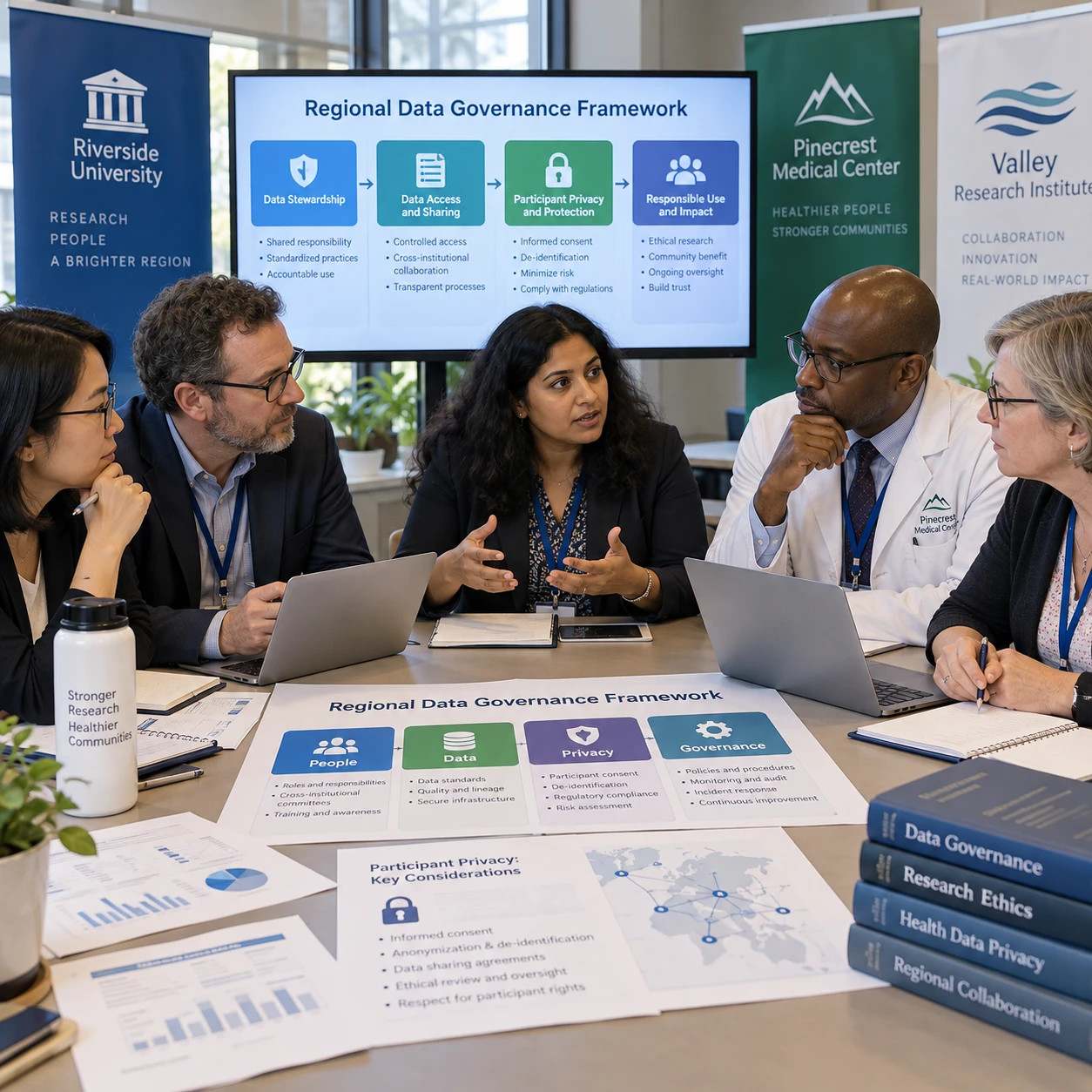
A regional researcher network can make collaboration more useful and efficient when members share data responsibly. Clear protocols help researchers understand what may be shared, who can access it, and how to protect the people and communities behind the data.
There is no single protocol that fits every institution or project. A sound network approach sets common expectations while allowing for differences in consent, research ethics review, local obligations, and the sensitivity of each dataset.
Why shared protocols matter across a regional network
Shared protocols give a regional research network consistent expectations for data access, use, and stewardship. They reduce avoidable confusion while helping members collaborate without setting aside participant rights or local requirements.
Without an agreed process, the same request might be approved quickly by one institution and delayed or rejected by another. Researchers may also make different assumptions about whether a dataset can be copied, linked, or used for a new purpose. A network-wide data-sharing protocol gives members a common starting point for those decisions.
Consistency does not mean every project follows identical rules. Instead, network policy can establish a baseline, then let project teams and institutions add safeguards that reflect the data and the conditions under which it was collected. For example, a regional health study may permit members to share summary statistics but require a separate review before anyone accesses identifiable records.
Good data governance also clarifies accountability. Members should know who holds the data, who decides on access, who responds to concerns, and who checks that approved conditions are followed. That clarity can build participant and community trust, though it takes time to document and maintain.
Core principles for ethical data sharing
Ethical data sharing rests on transparency, respect for informed consent, privacy, accountability, and responsible stewardship. These principles help network members judge whether a proposed use is appropriate, not merely technically possible.
Transparency means explaining, in language participants and community partners can understand, what data may be shared, with whom, and for what purposes. Researchers should avoid promising broad future access if the project cannot support it.
Privacy and confidentiality require attention to the chance that someone could be identified, including through combinations of fields that appear harmless on their own. Removing names may not be enough when a dataset includes rare characteristics, precise locations, or small communities.
Accountability means assigning real people or bodies to make decisions and address problems. The network should identify who reviews requests, who maintains access records, and how members report a breach or use outside the agreed scope.
Finally, respect for participants and communities includes considering potential harms beyond individual privacy. A dataset may stigmatize a community, expose sensitive locations, or be used in ways that conflict with local expectations. Ethical data sharing weighs those risks alongside research benefits, and does not assume that wider access is always better.
Agreeing on access, permitted use, and responsibilities
A network should define who can access each type of data, what uses are permitted, and what responsibilities come with approval. A clear process makes decisions more consistent while leaving room for project-specific review.
Start by classifying data according to risk and access needs. A practical scheme might distinguish public materials, controlled-access research data, and highly sensitive data that requires restricted environments or additional approvals. Keep the categories simple enough that members can apply them correctly.
For each access request, ask:
- Who is requesting access, and what is their role in the network?
- What specific research purpose will the data support?
- Does that purpose fit the informed consent and original project approvals?
- Which fields are necessary, and can the requested data be reduced or de-identified?
- How will the recipient secure, analyze, and eventually delete or return the data?
Permissions should be tied to a defined purpose, not granted as open-ended permission to reuse data. Approved researchers may need to complete training, work within a secure platform, or agree not to attempt re-identification. These controls can make collaboration slower, so use safeguards proportionate to the data’s sensitivity and the likely risks.
The network should also specify who can approve access. Depending on the project, that may include the data custodian, a research ethics review body, a community representative, or a data access committee. One approval should not automatically substitute for another when institutional or project requirements differ.
Handling consent, privacy, and sensitive data
Researchers should share data only when the proposed use fits the consent given, applicable ethics decisions, and the protections needed for the data. When those conditions are uncertain, pause the request and seek review rather than assuming sharing is allowed.
Consent terms vary. One study may allow sharing with named partner institutions, while another may limit use to a specific purpose or prohibit onward sharing. If records were collected under different terms, separate them by permission or apply the more restrictive conditions to any combined dataset when needed to prevent unauthorized use.
For sensitive research data, consider the whole route from transfer to analysis. Potential safeguards include removing direct identifiers, limiting geographic or demographic detail, using coded identifiers with the key stored separately, and granting time-limited access in a controlled environment. De-identification reduces risk but cannot guarantee that re-identification is impossible, particularly when datasets can be linked.
Researchers should also consider whether participants or communities could face harm even if individuals are not named. Data about health, migration, small populations, or sensitive cultural practices may require additional consultation and restrictions. The appropriate response may be to share aggregated results, provide access only through a secure enclave, or decline sharing when risks cannot be managed.
Where consent is unclear or a new use falls outside the original purpose, consult the relevant research ethics review body and data custodian. A protocol should explain how to document that decision and communicate any limits to recipients.
Creating a network data-sharing agreement
A network data-sharing agreement records the conditions for sharing, using, protecting, and disposing of research data. It should be specific enough to guide action but flexible enough to accommodate different projects and institutions.
At a minimum, document:
- Scope and purpose: which dataset is covered, the approved research questions, and any excluded uses.
- Roles: the data provider, recipient, custodian, access approver, and contacts for concerns.
- Permissions and restrictions: who may use the data, whether linkage is allowed, and whether onward sharing is prohibited or requires written approval.
- Security: approved storage and transfer methods, access controls, incident reporting, and any training requirements.
- Retention and disposal: how long access lasts and whether data must be deleted, returned, or archived under stated conditions.
- Publication and attribution: how contributors will be credited and whether disclosure or review is needed before publication.
- Changes and disputes: how amendments are approved and how disagreements or suspected misuse are escalated.
Use plain language where possible, and connect the agreement to the project’s consent records and ethics decisions. An agreement cannot create permission that participants did not give, nor replace an institution’s required review. Treat it as an operational record of approved conditions, not a shortcut around them.
Putting protocols into practice and reviewing them
Protocols work when members can find them, understand them, and use them in routine research decisions. Assign an owner, provide a clear request pathway, and review the rules when projects, risks, or institutional requirements change.
Publish a short network guide that explains data categories, request steps, decision timelines where known, and contacts for advice. Pair it with templates for access requests and data-sharing agreements. A short orientation for new members can cover consent limits, secure handling, and how to report a concern.
Review the protocol on a planned schedule and after significant changes, such as a new data platform, a change in project purpose, or an incident that reveals a gap. Ask members and community partners where decisions are unclear. Track practical measures such as incomplete requests, approval delays, and recurring questions; these can show where guidance needs improvement, though they do not measure trust on their own.
Common pitfalls are easier to prevent when the network names them:
- Assuming de-identification removes all risk: linked or rare data can still reveal identity. Reduce detail and control the analysis environment.
- Using one blanket agreement for every dataset: consent and sensitivity differ. Add project-specific schedules or conditions.
- Treating approval as permanent: permissions can be purpose-limited or time-limited. Record expiry dates and reassess changed uses.
For practical background on responsible research data management, members can consult the National Science Foundation’s research data policy guidance, while checking their own institution’s requirements. External guidance can inform a network policy, but it does not replace local ethics review or project-specific judgment.
FAQ
These answers offer a starting point; the right decision depends on the data, consent terms, project approvals, and institutional responsibilities.
What should a regional data-sharing protocol cover?
It should cover data categories, access criteria, permitted purposes, decision-makers, consent and privacy checks, security, retention, onward sharing, incident response, and review. Include a practical request process so members know how to apply the rules.
How should a network handle data collected under different consent terms?
Keep permission conditions linked to the relevant records and separate data where necessary. Before combining datasets, confirm that the proposed use fits each consent and ethics decision; seek review when terms conflict or remain unclear.
Who should approve access to shared research data?
The network should identify an authorized decision-maker, such as a data access committee or custodian, and specify when project leads, institutional offices, ethics review bodies, or community representatives must also be consulted. Approval should match the data and the request.
How can researchers share sensitive data responsibly?
Limit access to the minimum data needed, use safeguards suited to the risks, document the permitted purpose, and prevent unauthorized onward sharing. Consider secure analysis environments or aggregated results, and do not share when consent or risk cannot be resolved.